
Aultman Hospital saves money, saves time, and reduces errors with VoiceOver PRO®
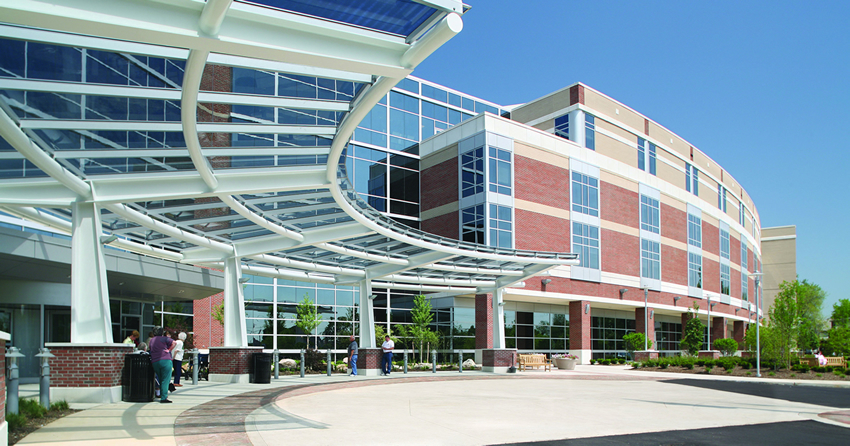
At Aultman Hospital in Ohio, the anatomic pathology laboratory services four locations, Main Campus (Canton), Orrville, Alliance, and Pomerene, as well as a free-standing GI endoscopy center. The lab is on track to complete 21,000 accessions this year using Oracle Health/Cerner Millennium PathNet as its laboratory information system (LIS). The pathology department operates with three anatomic pathologists sharing the laboratory workload and completing sign-outs, with one additional pathologist who primarily signs out bone marrows and frozen sections. The lab also has a Pathologists’ Assistant (PA) who handles grossing. One of the team’s pathologists, Dr. Pars Ravichandran, joined Aultman in June 2021. His previous institution had been a Voicebrook client, and Dr. Ravichandran was one of their pilot users of VoiceOver PRO®. “I was used to the convenience of PRO’s reporting and templates and standardized reports,” says Dr. Ravichandran. “When I came here to Aultman, I was a little surprised that we hadn’t implemented anything like PRO here.”
The challenges facing Aultman
No access to a shared library of templates Aultman’s sole Pathologists’ Assistant had been using the hospital-provided Dragon dictation and created his own templates. The pathologists would cover for the PA when he took his annual six-to-eight weeks of paid time off each year.
When we covered the gross room for our PA, we were not comfortable using Dragon. The templates he created were saved under his own personal profile in Cerner, and the Dragon templates you create there are not easily shareable. The setup was not conducive for pathologists using voice recognition. So when our PA was not here, we ended up doing gross work using Olympus Dictation, an old-fashioned digital dictation station networked to the transcriptionists, who had to type long and elaborate gross descriptions.
— Dr. Pars Ravichandran, Pathologist
Transcription bottlenecks All of Aultman’s pathologists were using the Olympus Dictation system, and the transcriptionists typed the reports. When Dr. Ravichandran started at Aultman, there were three transcriptionists; two of them worked only three days a week.
In addition to the main campus, we cover frozen sections and a couple of other facilities. During operating room coverage for frozen sections or endobronchial procedures, the timing is not in our control and they call anytime they need us. We have to go cover, then come back and resume our work. It puts us behind in finishing our slides. Typically our slides start to come from 8:00 AM to 1:00 PM, and the slides that come late to us are often complex cancer resection cases, which we end up reviewing and composing our reports at the very end of the day. Sometimes the transcriptionists had to stay beyond 8:00 PM, well past their regular shift, to type the reports so we could get them ready for sign-out the next morning. It wasn’t a good situation.
— Dr. Pars Ravichandran, Pathologist
Lack of standard procedure Dr. Ravichandran noticed that all three pathologists were doing their cancer synoptic reports in three completely different ways. One kept a binder of CAP protocols printed from the College of American Pathologists website, which was not being frequently updated. A second logged on to the CAP website whenever a cancer case crossed their desk and read the most current template off the screen word-forword, making the dictation files very long. The third tried to complete cancer cases from memory.
There are a lot of items which are now essential, and sometimes the pathologist missed those. So this led to a situation in the latter half of 2021 where approximately 10 percent of our cancer synoptic reports were asked to be corrected for errors.
— Dr. Pars Ravichandran, Pathologist
Report and transcription errors
In the case of the pathologist recreating the CAP protocols from memory, the errors were discovered during the hospital’s cancer center certification inspection by the American College of Surgeons. “When the inspectors were reviewing the reports for completeness and compliance with the cancer center accreditation requirements, they found that some reports were missing two essential data elements,” Dr. Ravichandran says. “We had to correct them, and it takes a lot of time to go back to each case and correct those reports.”
There were transcription errors as well, from both dictation mistakes and transcriptionist errors. “There was no instant way to know that you got something wrong,” Dr. Ravichandran recalls. “The next day when you look at it, or late in the evening when you look at it, it’s not always easy to catch those mistakes.”
The solution: VoiceOver PRO
About three months into Dr. Ravichandran’s time at Aultman, he contacted the physician in charge of IT and said the pathology department needed a system to help them improve their reporting. At that time, the hospital wanted them to try mTuitive. “But my problem with that was mTuitive does not offer full dictation capability,” Dr. Ravichandran explains. “It does help with synoptic reporting for cancer cases, which is like six or seven cases a day. But it wouldn’t help with all of the routine report generation work. We basically wanted a full voice recognition reporting system for all of our pathology reports, for consistency. So mTuitive simply wasn’t capable.”
It took more than six months of back and forth, with hospital IT leadership asking the pathology team to move completely to voice-recognized dictation. Dr. Ravichandran kept explaining that the Dragon system Aultman provided was “not capable of the multi-part formatting of the typical pathology workload, as well as the cancer synoptic reports.” Once the team saw a demo of VoiceOver PRO in action, the pathologists quickly threw their support behind PRO. It took a few more months for hospital administrators to sign off, pressured by the imminent retirement of one of their transcriptionists. “We wanted to be sure that we were prepared for any eventuality where we may not have much transcription support,” Dr. Ravichandran says.
Implementation: from kickoff to go-live in four months
The VoiceOver PRO project kickoff commenced at Aultman in August 2022. It took only four months for the pathology lab to go live, in December 2022, in VoiceOver PRO’s hosted environment. The hosted architecture connects the PRO desktop software to a web-hosted database in Microsoft Azure, allowing use of the application from any workstation and letting the lab realize the benefits of PRO without a massive upfront IT investment.
“The Voicebrook team has been very attentive,” says Allyson Blake, laboratory manager of Aultman’s Canton campus. “Their project management was very good. Everything stayed on track and the support they provide to the pathologists is great. If I have any questions or need anything, Voicebrook has been really good at getting back to me and keeping me updated, which I really appreciate.”
Voicebrook sent a three-person team to visit Aultman during the kickoff, sitting with each pathologist to observe their workflows, followed by two additional visits before go-live and on-site troubleshooting during go-live. Blake was impressed by how quickly the pathologists learned the system. “They’re very smart people and really great doctors, but sometimes they don’t mix well with technology; other technology we’ve tried to implement previously had a rougher process. I was impressed with PRO because it was very smooth and all the issues were addressed in a timely manner. The staff has been really happy with the system.”
VoiceOver PRO solves a crisis, before even going live The implementation went so well that Dr. Ravichandran was able to sign out more than 75 cases before PRO even went live. It happened out of necessity, when the PA was off and one of the doctors was covering the gross room, exploding the sole available transcriptionist’s workload. “We had a crisis on our hands. I thought, let me just use PRO. I used PRO exclusively, because for the simple reports it works perfectly, and the cancer checklists are already something you pass through CAP, so I knew it would work well.” His colleague Dr. Morgan, with no prior voice-recognition experience, adapted within weeks: “He said that he liked PRO very much and told me, ‘I cannot go back to regular dictation now.’”
The results
With VoiceOver PRO, we finish our workload 30 to 45 minutes earlier, on average. This is due to instant report creation by dictation and immediate sign out. At the end of a busy day, that time savings is a huge difference maker for us.
— Dr. Pars Ravichandran, Pathologist, Aultman Hospital
Major efficiency improvements
The moment Dr. Ravichandran completes a report, he sees it transfer into Cerner, verifies it looks good, and immediately releases it. “Getting a report out faster, even a few hours per case, can make a big difference in patient care. With PRO, as soon as you complete the diagnosis of the cancer or a biopsy specimen, the results are instantly released into Cerner. When clinicians do their rounding at 6:30 or 7:00 in the morning, they already have the complete result on their screens.”
Short-staffed? No problem When the lab was short-staffed in January and case volume ramped up, Dr. Ravichandran came in on a Saturday morning and dictated in his office with no disruption, finishing all the cases. That flexibility, he says, would not have been possible without PRO. “With PRO, you could come in at a convenient time, take a break, come back to the slides, do a careful review, and dictate at your own pace and control your own workflow.”
Saving money with automation
The efficiency gains were so significant that Aultman was able to eliminate two transcription positions and automate the process completely with PRO, redeploying those staff to higher-value work elsewhere in the department as case volumes climbed.
Templates offer efficiency and freedom PRO’s CAP checklists and custom templates have made the lab’s reporting faster, and Dr. Ravichandran anticipates even more time saved as the need to correct reports for missing CAP data elements drops. Although Cerner can create templates, Aultman’s IT department required a formal request for each one, which took time and expense amid IT staff shortages. “So when we set up PRO, I was amazed that we could create our own custom templates in PRO and they are shareable. We’ve already created templates, and in addition to cancer we’re now creating templates on non-cancer reports that have multiple data elements. This freedom to create templates in PRO and move them over to Cerner is enormously helpful.”
Consistency and fewer errors
During customization, pathology staff requested specific formatting elements like indentation and bolding to improve consistency. Aultman’s cancer center coordinators have told the department they appreciate the consistent formatting, compared to the previous state where all three pathologists’ cancer checklists were slightly different. Now the reports have standardized formatting and a uniform flow of information, so clinicians know exactly where to look for an essential piece of data.
No more mistakes Those formatting errors that plagued Aultman during its cancer center certification are no longer a concern. “Those inspectors go line-by-line. They randomly review 20 or 30 percent of our reports, so if an incomplete report gets into their hands, you will hear about it. But now, PRO prevents those errors. When you try to move a report over to Cerner without completing an important element, PRO tells us that we are missing certain elements and prompts us to correct them.” Dr. Ravichandran used to worry whether he was using the most up-to-date CAP electronic Cancer Protocols (eCP). “That worry is now gone. I can be assured that what passes through to me from PRO is going to be the latest updated version.”
We were able to eliminate two transcription positions by automating the process completely with PRO. That’s huge, because with staffing shortages we were able to take those positions and transition them elsewhere.
— Allyson Blake, Lab Manager, Aultman Hospital